
Encrypted messaging content marketing sounds like a channel decision until the first campaign goes sideways. A team opens a private community, adds a few hundred customers or subscribers, starts posting updates, and quickly realizes the usual content calendar does not map cleanly to private threads.
Messages feel more direct. Mistakes feel more personal. Replies create support work. Screenshots can travel. Sensitive customer context appears in places where the content team did not expect it.
Teams think the problem is reach. The real problem is operating discipline.
In 2026, private messaging is part of the publishing stack for many brands, creators, newsletters, and B2B teams. But encrypted messaging content marketing only works when it is treated as a workflow: consent, segmentation, drafting, review, approval, delivery, response, measurement, and security. That changes the conversation from what should we post to who is allowed to say what, to whom, under which review lane, and with what follow-up path.
Table of contents
- Encrypted messaging content marketing is an operating model, not a channel
- Build around consent, identity, and trust
- Design the channel architecture before writing campaigns
- What to publish in encrypted messaging channels
- Workflow: from idea to approved private message
- Measurement without surveillance creep
- Operational security for content teams
- Common failure modes in encrypted messaging content marketing
- What works: practical plays for publishers and marketers
- Where bl0ggers.com fits in the publishing workflow
- Closing: treat encrypted messaging content marketing like infrastructure
Encrypted messaging content marketing is an operating model, not a channel
Encrypted messaging content marketing is not email with shorter copy. It is not social media with smaller rooms. It is a private publishing environment where trust is part of the product.
The mistake teams make is treating a secure messaging app as another place to paste the campaign. The practical question is different: what needs to happen before a message enters a private channel, and what happens when people reply?
Why private channels change editorial math
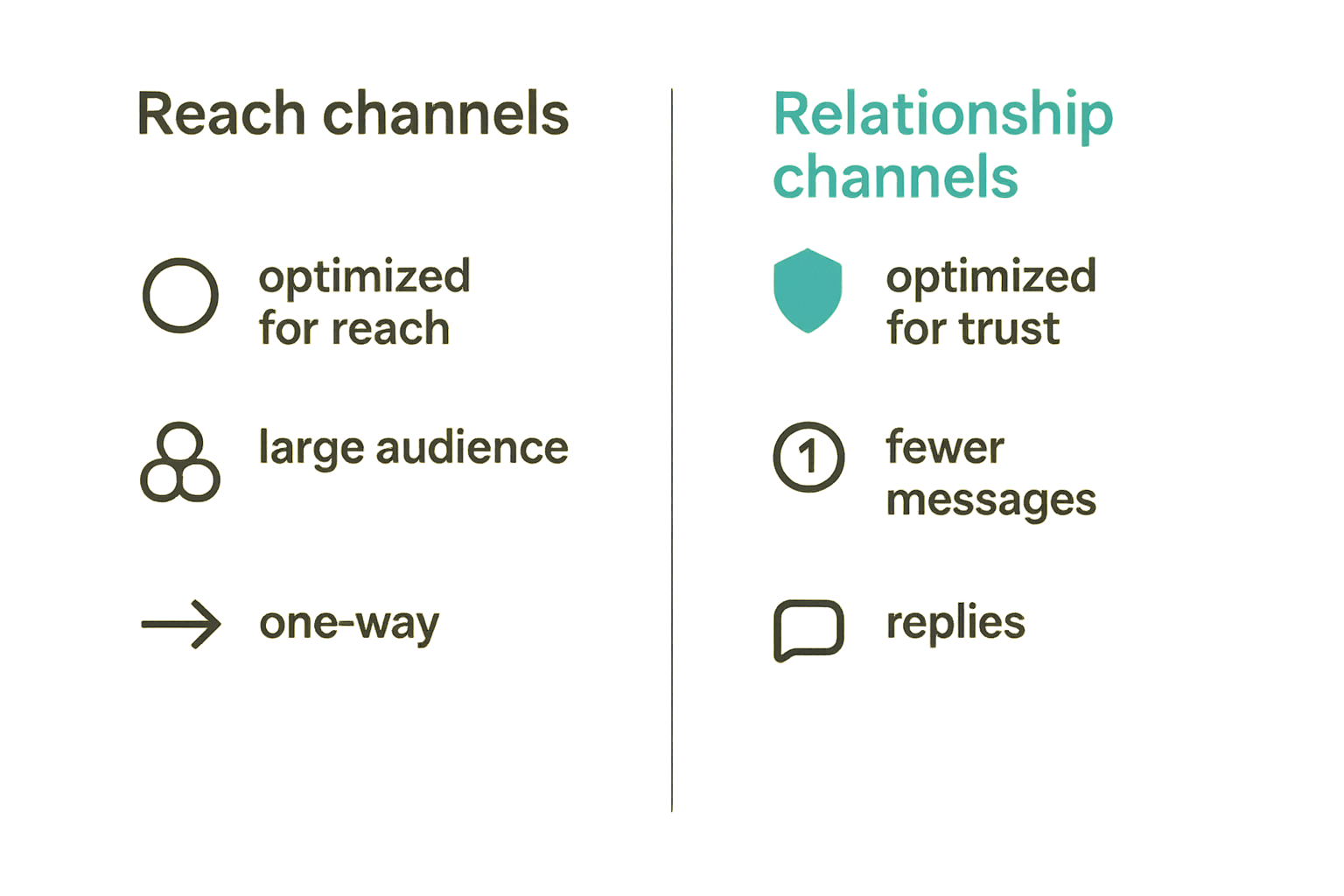
Public publishing is optimized for discoverability. Private messaging is optimized for relevance, timing, and relationship context.
That changes the editorial math in four ways:
- The audience expects fewer messages, not more.
- The sender identity matters more than the brand handle.
- Replies are part of the content experience, not noise.
- Trust can be damaged by one careless message.
In a public feed, a weak post is ignored. In an encrypted group or direct channel, a weak message interrupts someone. That interruption has a cost.
Practical rule: If the message would not be worth sending from a real person on your team, it probably does not belong in a private messaging channel.
Where encrypted messaging fits beside email and social
A useful way to think about it is to separate reach channels from relationship channels.
| Channel | Best use | Weakness | Operating risk |
|---|---|---|---|
| Public social | Discovery, commentary, broad awareness | Low control, short attention | Brand inconsistency |
| Email newsletter | Owned audience, structured publishing | Inbox fatigue, delayed response | Deliverability and list quality |
| Encrypted messaging | High-trust updates, private groups, direct response | Limited scale, harder measurement | Over-messaging and support load |
| Website or blog | Durable authority, search, reference material | Slower feedback loop | Content decay |
Encrypted messaging should not replace the blog, newsletter, or public social presence. It should connect them. A blog post can introduce a concept. A newsletter can package it. A private message can invite a specific group to discuss what it means for them.
Build around consent, identity, and trust
Encrypted channels raise the bar for permission. Not legally in every case, but operationally. People treat private message space as personal space. If your content team ignores that, performance will decline even if the platform metrics look fine.
Permission is the first content format
Before you write the campaign, write the permission model. The opt-in message, group description, onboarding note, and exit path are part of the content system.
A clean opt-in should answer:
- What will people receive?
- Who will send it?
- How often will it arrive?
- Can they reply?
- How do they leave?
The mistake teams make is burying these answers in terms or onboarding copy. In private messaging, clarity is not administrative overhead. It is the first trust signal.
Segment by relationship, not vanity demographics
Private-channel segmentation should be based on relationship state, not broad demographic labels.
Better segments look like this:
- Paid subscribers waiting for a weekly operator note.
- Customers participating in a product feedback circle.
- Event attendees receiving day-of logistics.
- High-intent leads who requested a private buying guide.
- Creators collaborating on a launch calendar.
Weak segments look like this:
- Everyone in the CRM.
- People under 35.
- Anyone who clicked a post once.
- All newsletter subscribers by default.
Relationship-based segmentation prevents the classic private-channel failure: treating trust as a list size problem.
Practical rule: Do not invite someone into an encrypted content channel unless you can explain the relationship they have with the sender and the job the channel performs.
Design the channel architecture before writing campaigns
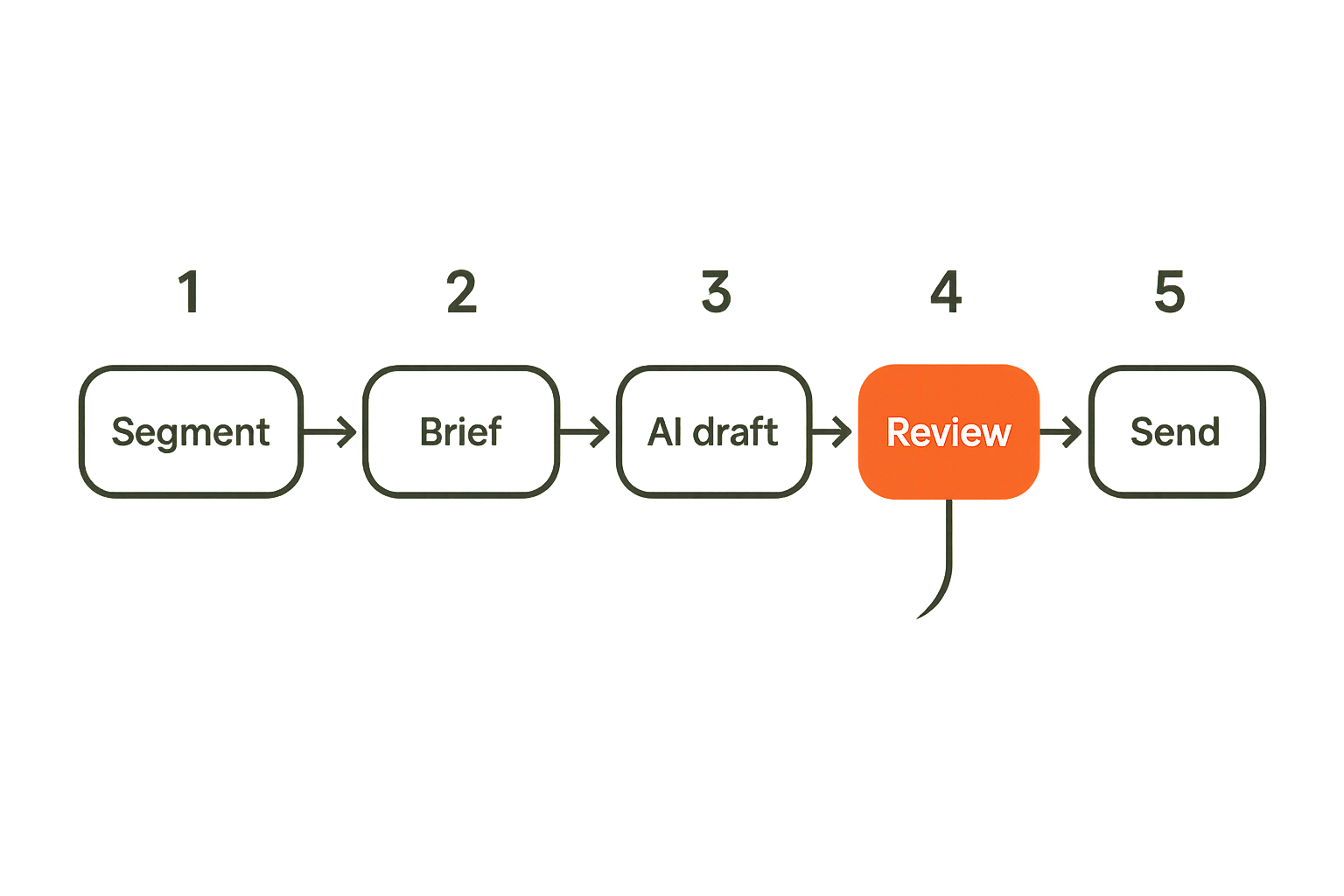
The channel architecture decides whether encrypted messaging content marketing becomes a useful publishing layer or a messy side project.
Architecture sounds heavy, but for content teams it means simple decisions made early: who owns the channel, where drafts live, how approvals work, which messages are logged, and what happens when readers respond.
The minimum viable private publishing stack
You do not need a complex system to start. You do need a deliberate one.
A minimum viable private publishing stack includes:
- A source of truth for content ideas and campaign briefs.
- A drafting workspace where AI can assist without becoming the approver.
- An editorial review lane for accuracy, tone, and sensitivity.
- A sender map that defines which person or team account sends each message.
- A response path for questions, complaints, and support issues.
- A measurement sheet or dashboard that tracks outcomes without invasive monitoring.
If these pieces are missing, the channel will depend on whoever is most attentive that week. That works for a launch. It does not work in production.
Human-in-the-loop review lanes
Private messages often feel informal, which is exactly why they need review lanes. The risk is not only factual error. It is tone, timing, audience fit, and implied commitment.
Create review lanes based on risk:
| Message type | Example | Review needed |
|---|---|---|
| Low risk | Weekly link roundup for opted-in readers | Editor review |
| Medium risk | Product update for customers | Editor plus product owner |
| High risk | Pricing, legal, security, embargoed news | Editor plus executive or specialist approval |
| Sensitive | Customer-specific or source-related message | Named owner approval, no automation |
This is where human-in-the-loop AI publishing matters. AI can compress the draft cycle, generate variants, summarize context, and check clarity. It should not decide whether a sensitive message is safe to send.
AI assistance without leaking sensitive context
Many content teams want AI support for private-channel messages, but they should avoid pasting raw customer conversations, unreleased product details, or private community screenshots into tools without a policy.
A safer pattern is to use structured briefs:
- Audience: paid newsletter members in the analytics cohort.
- Goal: invite feedback on next month’s report format.
- Constraints: no names, no private quotes, no unreleased metrics.
- Tone: concise, direct, useful.
- Call to action: reply with one friction point.
The team at qrypt.chat works from the secure communication side of this problem, and the same principle applies to publishing workflows: protect the conversation context before you optimize the content output.
What to publish in encrypted messaging channels
Encrypted messaging is strongest when the content benefits from proximity. If the message does not improve because it is private, timely, or relationship-specific, publish it somewhere else.
Formats that work in private threads
Strong formats include:
- Early access notes for paying subscribers.
- Short operator memos with one decision or lesson.
- Event logistics and last-minute updates.
- Customer advisory prompts.
- Private Q&A invitations.
- Community prompts that need a trusted room.
- Renewal, onboarding, or implementation nudges.
- Personal follow-up after a webinar, workshop, or launch.
These formats work because they match the channel. They are specific. They invite a response. They do not pretend a private room is a public billboard.
What fails when teams repurpose social content
What breaks in practice is usually not the tool. It is content-context mismatch.
Repurposed social content often fails because it is:
- Too performative for a private room.
- Too vague to justify an interruption.
- Too frequent for the relationship.
- Too hard to respond to.
- Too disconnected from the audience’s current problem.
A private message should usually be shorter than a newsletter, but more useful than a social caption. It should make the recipient think: this was meant for people like me, at this moment, for a reason.
Practical rule: Private-channel content should pass the reply test. If there is no useful reply someone could send, reconsider whether the message belongs there.
Workflow: from idea to approved private message
Encrypted messaging content marketing becomes manageable when it has a repeatable workflow. Without one, teams either over-control everything and move too slowly, or under-review messages and create avoidable risk.
A practical seven-step production sequence
Use this sequence as a baseline:
- Define the relationship segment. Name the exact audience and why they opted in.
- Define the job of the message. Choose one outcome: inform, invite, remind, support, or request feedback.
- Draft from a structured brief. Use AI for first drafts, variants, and tightening, not for final judgment.
- Classify risk. Low, medium, high, or sensitive.
- Route for review. Match the review lane to the risk classification.
- Send with ownership. Use the right sender identity and a clear reply expectation.
- Log outcomes. Capture replies, issues, unsubscribes, qualitative feedback, and follow-up tasks.
The practical question is not whether this adds process. It does. The better question is whether the process is lighter than repairing trust after a careless private message.
Quality gates before a message goes out
Before sending, ask five questions:
- Is this audience explicitly or clearly opted in for this type of message?
- Is the sender identity appropriate?
- Is the message specific enough to justify the interruption?
- Does it contain sensitive information that should be removed or approved?
- Is someone responsible for replies?
If the answer to the last question is unclear, do not send yet. Private-channel publishing without reply ownership is just support debt with better branding.
Measurement without surveillance creep
Content marketers like measurement. Private channels complicate it. You can track outcomes, but the more aggressively you instrument a trusted channel, the more you risk changing how the audience feels about it.
Metrics that respect the channel
Measure operationally useful signals, not every possible behavior.
Good metrics include:
- Opt-in rate by source.
- Unsubscribe or exit rate after message types.
- Reply rate by segment.
- Qualified response count.
- Support issues created.
- Content ideas generated from replies.
- Conversion events that recipients intentionally take.
Weaker metrics include anything that requires excessive tracking, unclear consent, or a false sense of precision. Private sharing, screenshots, forwarded thoughts, and word-of-mouth are real, but they often resist clean attribution.
Attribution boundaries and dark social
Encrypted messaging creates dark social effects. People read something privately, discuss it elsewhere, then convert later through a channel that does not reveal the original influence.
Do not force the data to be cleaner than reality. Use directional measurement:
- Compare cohorts that opted into the channel versus those that did not.
- Ask simple self-reported attribution questions.
- Track reply themes and sales or subscriber conversations.
- Monitor churn, retention, and renewal signals where relevant.
That changes the conversation from prove every click to understand whether this relationship channel improves outcomes over time.
Operational security for content teams
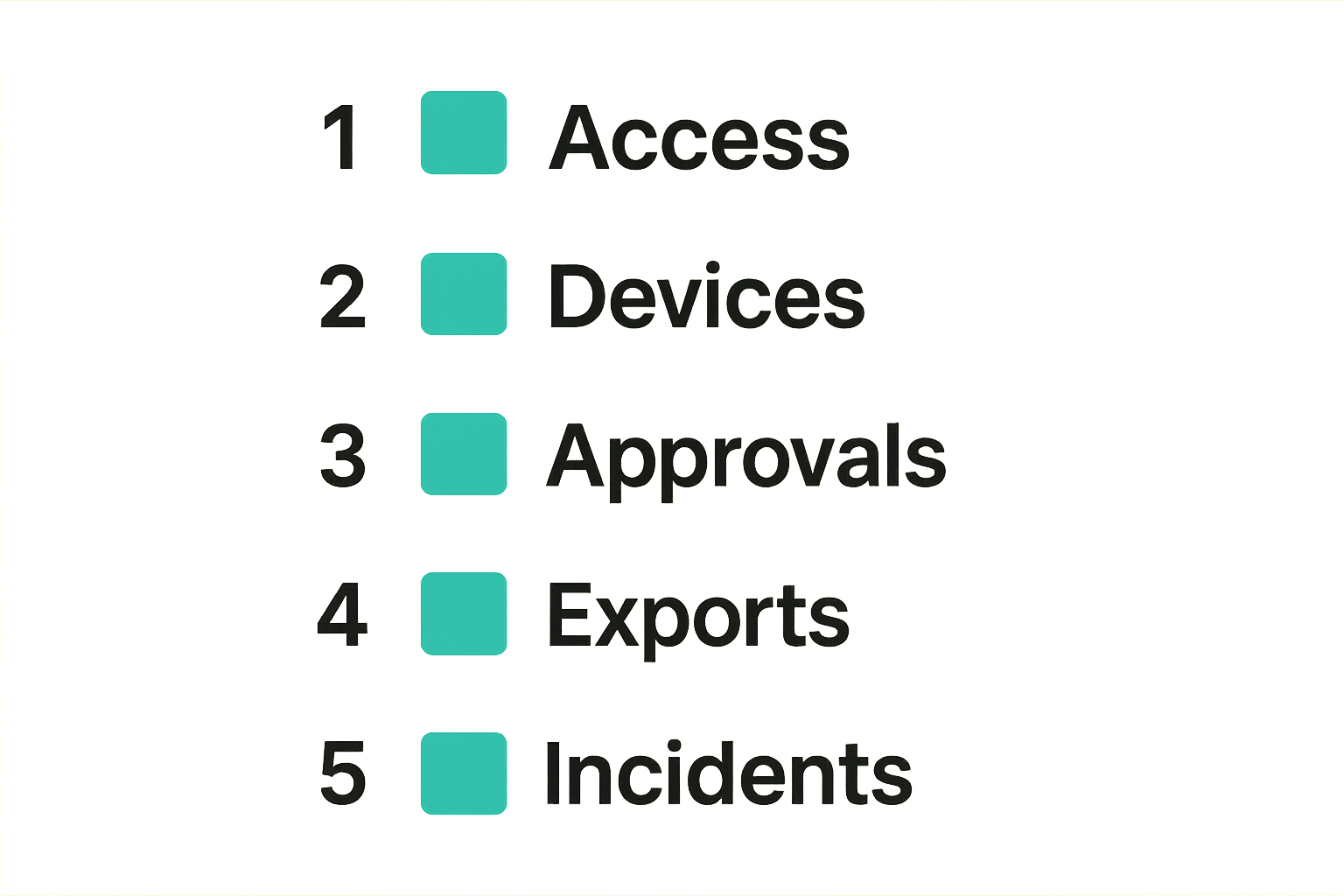
Encrypted messaging content marketing creates a strange overlap: editorial operations, audience development, support, and security all meet in one workflow. That overlap is useful, but only if ownership is clear.
Access control and device hygiene
The basics matter:
- Limit admin rights to people who actually need them.
- Remove access immediately when contractors or employees leave.
- Use strong device locks and account recovery controls.
- Avoid shared personal devices for official channels.
- Document who can export, screenshot, or archive content.
- Keep a simple incident process for accidental sends or account compromise.
For small teams, this may feel excessive. In practice, the messiest failures often come from basic access problems: a former contractor still in a group, a team member sending from the wrong account, or a phone notification exposing sensitive context in the wrong environment.
Handling embargoes, sources, and customer details
Content teams often handle information before it is public: launch dates, source quotes, sponsor details, customer complaints, research findings, financial context, and product roadmap notes.
Private messaging can make that information feel safer than it is. Encryption protects transport and access patterns depending on the tool, but it does not make bad handling harmless. People can still forward, screenshot, summarize, or misread.
A practical policy should define:
- Which details cannot enter messaging channels.
- Which details can be summarized but not quoted.
- Which messages require named approval.
- How long sensitive working groups remain open.
- When private conversation becomes publishable material.
Practical rule: Treat encrypted channels as lower exposure, not zero exposure. Write and approve messages as if they may be read outside the original room.
Common failure modes in encrypted messaging content marketing
Most failures are predictable. Teams move fast, private channels feel casual, and nobody wants to slow down a message that is only going to a small group. Then the small group becomes important, and the informal system starts to crack.
Over-broadcasting a relationship channel
Over-broadcasting is the fastest way to drain trust. It happens when teams use private messaging to push every launch, post, offer, survey, event, and reminder.
The symptom is not always a spike in unsubscribes. Sometimes people stay but stop replying. The room becomes quiet. The relationship weakens without producing a clean metric.
What works:
- Define message frequency expectations.
- Reserve private sends for high-relevance updates.
- Combine lower-priority items into digests.
- Let people choose subtopics where possible.
What fails:
- Posting every public announcement privately.
- Treating silence as approval.
- Letting every department send into the same channel.
Losing the thread between content and support
Private messages invite replies. Some replies are editorial feedback. Some are buying signals. Some are support tickets. Some are complaints.
If the content team owns the channel but support owns the resolution, you need a handoff. Otherwise replies get acknowledged but not solved.
A simple routing model helps:
| Reply type | Owner | Response expectation |
|---|---|---|
| Editorial feedback | Content lead | Thank, tag theme, consider for future content |
| Product question | Product marketer or support | Answer or route within one business day |
| Sales interest | Sales or founder | Qualify and continue privately |
| Complaint | Support owner | Acknowledge, move to resolution path |
| Sensitive disclosure | Named senior owner | Pause automation, handle manually |
The mistake teams make is calling every reply engagement. Some replies are obligations.
Automating away judgment
Automation is useful for reminders, routing, tagging, and draft assistance. It becomes risky when it decides context.
Bad automation patterns include:
- Sending follow-ups based only on inactivity.
- Using the same personalization logic across all private groups.
- Auto-responding to sensitive messages.
- Summarizing private replies without review.
- Triggering sales sequences from community participation.
A better pattern is automation with checkpoints. Let the system draft, classify, remind, and queue. Let humans approve, interpret, and escalate.
What works: practical plays for publishers and marketers
Encrypted messaging content marketing is most useful when tied to a specific publishing motion. Do not start with a general group. Start with a job.
Newsletter companion groups
A newsletter companion group works when the newsletter already has a clear point of view and a reader segment that wants more interaction.
Good uses:
- Discuss one issue per week.
- Collect reader questions before publishing.
- Share behind-the-scenes notes for paid subscribers.
- Invite members to vote on upcoming topics.
Keep the newsletter as the durable artifact. Use the private channel for context, feedback, and relationship depth.
Customer advisory circles
For B2B teams, small encrypted groups can support advisory circles. These are not announcement feeds. They are structured feedback rooms.
The operating model should include:
- A clear invitation and purpose.
- Named facilitator ownership.
- Monthly prompts or working sessions.
- A policy for how feedback becomes roadmap input.
- A recap loop so participants see what happened with their input.
This works because people are not just receiving content. They are contributing to the thinking behind it.
Creator membership updates
Creators and independent publishers can use encrypted messaging for membership value, but the boundary matters. Members are not buying unlimited access to the creator’s attention unless that is explicitly the offer.
Good private updates include:
- A short weekly note.
- Early access to research or drafts.
- Voice notes with context that would be too informal for the public feed.
- Member-only prompts tied to a larger publishing calendar.
What fails is constant availability. If a creator trains members to expect immediate replies at all hours, the channel becomes operationally expensive and emotionally difficult to sustain.
Where bl0ggers.com fits in the publishing workflow
The useful role for AI in encrypted messaging content marketing is not to replace editorial judgment. It is to make the human review loop faster, clearer, and more consistent.
For teams using bl0ggers.com, the private-channel workflow can start upstream from the message itself: idea capture, draft generation, editorial review, approval, and repurposing into channel-specific formats.
Draft faster, approve slower
This sounds contradictory, but it is the right operating posture.
Drafting should be fast because blank-page time is expensive. AI can turn a campaign brief into variants for a newsletter, blog intro, community note, and private message. It can also produce shorter versions, tone adjustments, summaries, and headline options.
Approval should be slower where risk is higher. Not bureaucratic. Deliberate.
For private messaging, that means the team can use AI to prepare options, then route the final message through a human lane that checks consent, sensitivity, timing, and reply ownership.
Turn private feedback into publishable insight
Private replies are a content asset, but not automatically a publishable one. The workflow should separate raw conversation from approved insight.
A practical pattern:
- Capture themes from replies without exposing names or private details.
- Group themes into editorial opportunities.
- Ask whether any quote, story, or example needs permission.
- Create a public-safe brief.
- Draft the blog, newsletter, or resource from the approved brief.
This is where human-in-the-loop publishing becomes more than quality control. It becomes trust control.
Closing: treat encrypted messaging content marketing like infrastructure
Encrypted messaging content marketing will keep growing because audiences are tired of noisy feeds and overloaded inboxes. But private channels are not magic. They are higher-trust environments with higher operational expectations.
Teams that win here will not be the teams that send the most messages. They will be the teams that design the cleanest workflow: consent first, useful segmentation, clear review lanes, careful AI usage, respectful measurement, and real reply ownership.
Final operating principles
If you only take a few rules from this, use these:
- Private channels are relationship infrastructure, not campaign leftovers.
- Consent and expectations are part of the content.
- AI should accelerate drafting, not approve sensitive communication.
- Replies create obligations, not just engagement.
- Measurement should respect the trust level of the channel.
- Security basics matter because content teams handle sensitive context.
The practical question is not whether encrypted messaging belongs in the content stack. For many publishers, creators, and marketers, it already does. The question is whether the workflow is mature enough to protect the trust that makes the channel valuable.
That is the real work of encrypted messaging content marketing.
Try bl0ggers.com
Use bl0ggers.com to increase publishing output with AI-assisted drafts, review lanes, and human editorial control. Try bl0ggers.com.